
Tuesday, October 16, 2007


Saturday, October 6, 2007
When Dialogue Became King
 With the premiere of THE JAZZ SINGER on October 6, 1927, the screenplay had entered the modern era alongside Fitzgerald and Art Deco. The silent film form would die off, acting styles would change, and dialogue would become king. Now the screenwriter needed not only the gift of sight, but a loud voice and the ability to listen.
 Al Jolson and Eugenie Besserer in THE JAZZ SINGER:
Then Jolson plays and sings Irving Berlin's BLUE SKIES. The Jazz Singer (1927 film) - wiki Sound Film - wiki Vitaphone - wikiJack: Did you like that, Mama?
Sara: Yes...
Jack: I'm glad of it. I'd rather please you than anybody I know of. Oh, darlin', will you gimme something?
Sara: What?
Jack: You'll never guess. Shut your eyes, Mama. Shut 'em for little Jakie. Haw, I'm gonna steal something [he kisses her]. Ha, ha, ha, ha, ha, ha!
Sara: Oh, Jakie, oh...
Jack: I'll give it back to you someday too, you see if I don't. Mama darling, if I'm a success in this show, well, we're gonna move from here.
Sara: Oh, no.
Jack: Oh yes, we're gonna move up in the Bronx. A lot of nice green grass up there, and a whole lot of people you know. There's the Ginsbergs, the Guttenbergs, and the Goldbergs. Oh, a whole lot of Bergs. I don't know 'em all. And I'm gonna buy you a nice black silk dress, Mama.
Sara: Ohh...
Jack: You'll see, Mrs. Friedman, the butcher's wife, she'll be jealous of you.
Sara: Oh, no...
Jack: Yes she will. You'll see if she isn't. And I'm going to get you a nice pink dress that will go with your brown eyes.
Sara: Oh, no, Jakie, no. I...I...
Jack: What do you mean, "no"?
Sara: Oh, no, dear.
Jack: Who, who is tellin' ya? What do you mean, "no"? Yes, you'll wear pink or else. Or else you'll wear pink. Hm, hm, hm, hm. And darlin', ohh, I'm gonna take you to Coney Island.
Sara: Yeah?
Jack: Yes, you're gonna ride on the shoot-the-chute.
Sara: Oh ho...
Jack: And you know the dark mill.
Sara: Yeah?
Jack: Ever been in the dark mill?
Sara: Oh, no, I wouldn't.
Jack: Well, with me it's alright. I'll kiss ya and hug ya—you'll see if I don't. Now Mama, Mama, stop now, you're gettin' kittenish. Mama, listen, I'm gonna sing this like I will if I go on the stage, you know, with the show. I'm gonna sing it jazzy. Now get this.
Tod Browning Died A Recluse
Tod Browning
July 12, 1880 - October 6, 1962
RIP

Born in Louisville, Kentucky, Tod Browning ran away from home to join the carnival, worked in the sideshow, the circus, and then vaudeville. He acted in the silents and D.W. Griffith helped him develop his directing career. After working for Metro, Browning went to Universal where he met Irving Thalberg.
Forget about having a hunch, Irving Thalberg knew if you put Tod Browning and Lon Chaney together the result would be a successful film. This combination made several movies and a lot of money together including THE UNHOLY THREE, THE ROAD TO MANDALAY, THE UNKNOWN, LONDON AFTER MIDNIGHT, and WEST OF ZANZIBAR. The collaboration ended when Chaney died of cancer and Browning had to replace him with Bela Lugosi in DRACULA.
When the first decade of the sound era, Tod made three of his best films including DRACULA, FREAKS, and MARK OF THE VAMPIRE. Afterwards, Tod's life went to hell. Thalberg died of a fatal heart attack and Tod's films stopped making money. Always a sensitive man, Tod's guilt over a car accident fatality and his depression following the death of his father led him to alcoholism. He stopped making movies and became a recluse. After his wife died, little was heard from him. He developed throat cancer. On October 6, 1962, he dropped dead in the bathroom of some Brentwood friends he was staying with.
Tod Browning - Find A Death
Tod Browning - wiki
Tod Browning - imdb
Tod Browning - Silent Star
Sunday, September 30, 2007
Thursday, September 27, 2007
Arthur Penn's 85th Birthday!

Arthur Penn, Born September 27, 1922
Seeing Arthur Penn's BONNIE AND CLYDE in 1967 at the Vermont Drive In Theatre (or was it the Twin-Vue?) in Gardena turned out to be a better education than any junior high school history class I was then taking. As a drama student who had seen a lot of movies (including Penn's 1958 THE LEFT HANDED GUN on TV), I understood this new film was a highly-stylized, dramatic representation of true events. I wasn't looking for the movie to be a documentary. When those groundlings watched Shakespeare's MACBETH do you think they wanted a history lesson?
The movie stimulated my curiousity and from that point on I read everything I could in search of the "true story." Along the way and to this day, I learned that history is relative. Law knows even witness testimony can be innocently distorted. I haven't given up on truth, because essence and context is everything, but I've never expected literal literary or cinematic adaptations. The fun part for me has always been trying to figure out the "truth" (as I see it) compared to the fiction. As a die-hard, lifelong bookworm, I've approached a number of subjects in this manner.
My late father's birthday was 7 days prior to Penn. He would've been 85 this year too, but, for the record, he smoked like a chimney, drank like a fish, and ate like a pig. He loved every minute of it. He stroked out at 70. He loved to read, particularly books on WWII (he served in the Army in Europe), and taught me to love reading too.
Essentially, BONNIE AND CLYDE taught me to how to study history, as well as drama. Penn's work led me to study the "true stories" of BILLY THE KID, HELEN KELLER, ARLO GUTHRIE (his father WOODY), GEORGE CUSTER and the NATIVE AMERICAN HOLOCAUST.
We have a lot to thank Arthur Penn for. Happy Birthday!
Arthur Penn - Senses of Cinema
Arthur Penn - wiki
Arthur Penn - imdb
Friday, September 21, 2007
Ethan Coen Turns 50
 Happy Birthday Ethan Coen (b.1957) and thank you for making films that expand consciousness. You and your brother Joel continue to illustrate, to paint upon your screen canvas, a portrait of the authentically eccentric, true nature of human beings. We are all of us really as truly strange as you depict us. Objectively speaking, of course.
 When I saw BLOOD SIMPLE, it appeared to be an unusual and delightful curiousity. I missed RAISING ARIZONA at the time it was released, but now find it to be one of Nicholas Cage's best comic films (although VAMPIRES KISS is awesome) and a testament to the idea that the ignorant can be a danger to civilization. MILLER'S CROSSING felt like a story from my own family's past generations in Providence. But BARTON FINK, I believe is their masterpiece.
BARTON FINK synthesizes the Hollywood of the past that we imagine existed along with the present day Hollywood the Coen brothers live/lived in. Like Harold Pinter, the Coen brothers take the time, within the pressure from plot, to focus on the individual character. While the entire story serves to develop the main character, BARTON FINK, and his journey through Hollywood, the other characters are presented in all their eccentricity objectively, without rationale or apology. We see these "strange people" from the outsider's position, thus accentuating the normal nuance of everyday life one is used to. Barton's from NYC, he writes about fish mongers and the disenfranchised. What does he know about pedagogical bellboys, manic-depressive studio bosses, and beleaguered cops? He related easily to the drunken southerner because they're both writers, but couldn't manipulate the traveling salesman to stop talking and listen to his philosophy. BARTON FINK turns out to be not so much a cartoon, but a mirror held up to reality.
Along the way, the screenplay for THE HUDSUCKER PROXY came to my desk. I read it and loved it. Yes, I knew about the Coen brothers and this influenced my perspective as well as my opinion, but I'd also seen HIS GIRL FRIDAY and the films of Frank Capra and Preston Sturges, so I knew what they were doing. However, the film was not well received and is considered one of their failures.
SPOILER ALERT! The following synopsis is from a pre-production draft of the screenplay. Plots and characters often change during the development process, as well as during production, so the story represented here will just as often not match the finished product. But that's part of the fun.
June 14, 1992
THE HUDSUCKER PROXY
Screenplay by Joel Coen, Ethan Coen, Sam Raimi
Synopsis by Brian Aldrich
In 1958, NORVILLE BARNES, 20's, has just arrived in New York City fresh out of a Munchie, Indiana business school, looking to make his fortune. After screwing up a bunch of menial jobs, he gets a position in the mail room at Hudsucker Industries. Meanwhile, WARING HUDSUCKER, President of the company, commits suicide, jumping out the window of the company skyscraper. His V.P., SID MUSSBURGER, and the other BOARD MEMBERS come up with a plan to save the company from getting into the hands of others: They decide to promote some company idiot to be the new President, thus causing the stock to drop until it reaches a low price that they can afford to buy and then take over the company. Meanwhile, an important letter has been left from Waring to Sid. Norville is ordered to deliver it. After Sid sees what an idiot Norville appears to be, he promotes Norville to be the new President. Norville is dressed and groomed and placed behind the oak desk. The letter is never delivered.
Down at the local newspaper, Pulitzer-winning journalist AMY ARCHER thinks something is fishy with this bizarre promotion of a nobody at Hudsucker. At a diner, she introduces herself to Norville, acting like a lost lass, fresh off the bus from Munche, giving a false name. Norville takes the bait and gives her a job as his secretary. Behind his back, she publishes a story telling the world that he is an idiot. Meanwhile, Sid's plan is going well. The stock is dropping and everyone Norville meets realizes the company is in big trouble. Meanwhile, after a discussion with the omnipresent and omnipotent janitor MOSES (a god-like narrator of the screenplay), she figures out that Sid is using Norville. Also, she has fallen for Norville.
Eventually, Norville shows Sid his new invention. Sid considers the invention worthless and in an effort to further sink the company, develops and retails the product. The new toy turns out to be the HULA HOOP and becomes a giant success, soaring the company stock sky high. Norville is praised by everyone, includent President Eisenhower. Norville gets arrogant. He and Amy fight. Sid reacts by leaking a press story that Norville stole his idea from BUZZ, the elevator boy. Further, Sid gets a shrink to declare Norville insane. Norville is ruined. He considers suicide, but before he can change his mind, he falls off the skyscraper. Moses stops the company clock and thus, STOPS TIME. Hanging in mid-air, Hudsucker (now an angel) appears and tells Norville to read the letter which turns out to be a will that leaves the entire company to the newest employee--Norville. Hussucker tells Norville to deliver the letter. After time is restarted, Norville survives the rest of the fall and delivers the letter. Sid almost commits suicide. Norville reconciles with Amy and takes over the company. He invents the frisbee.
SUMMARY CRITICISM:
Hysterical and charming, this screenplay is like HIS GIRL FRIDAY and IT'S A WONDERFUL LIFE, as if it were starring Harold Lloyd and directed by Billy Wilder.
Ethan Coen - imdb
Monday, September 17, 2007
M*A*S*H 35th Anniversary
 M*A*S*H Original Run on CBS:
September 17, 1972 - February 28, 1983
Lyrics to the song "Suicide is Painless"
by Johnny Mandel (music) and Mike Altman (lyrics)
Through early morning fog I see
visions of the things to be
the pains that are withheld for me
I realize and I can see...
[REFRAIN]:
that suicide is painless
It brings on many changes
and I can take or leave it if I please.
I try to find a way to make
all our little joys relate
without that ever-present hate
but now I know that it's too late, and...
[REFRAIN]
The game of life is hard to play
I'm gonna lose it anyway
The losing card I'll someday lay
so this is all I have to say.
[REFRAIN]
The only way to win is cheat
And lay it down before I'm beat
and to another give my seat
for that's the only painless feat.
[REFRAIN]
The sword of time will pierce our skins
It doesn't hurt when it begins
But as it works its way on in
The pain grows stronger...watch it grin, but...
[REFRAIN]
A brave man once requested me
to answer questions that are key
is it to be or not to be
and I replied 'oh why ask me?'
[REFRAIN]
'Cause suicide is painless
it brings on many changes
and I can take or leave it if I please.
...and you can do the same thing if you please.
Larry Gelbart (TV series creator) - wiki
Johnny Mandel (Composer) - wiki
Tuesday, September 11, 2007
"September Dawn" - 150th Anniversary of the Massacre

Saturday, September 8, 2007
Happy 60th Birthday Ann Beattie!

Friday, September 7, 2007
80 Years of Electronic Television Courtesy of Philo T. Farnsworth
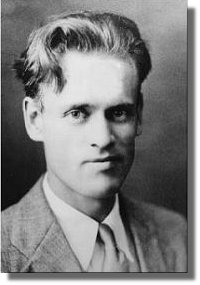
"When Farnsworth had finalized the plans for his television system and drawn detailed diagrams, he filed for his first patent. The application was submitted on January 7th, 1927, and to the extent that these documents disclosed an invention that would work, that date is the official date that television was invented. Still, the patents could not be officially granted until the device had been proven to work, or 'reduced to practice.' And that was still a long way off.
"On September 7, 1927 the system was ready to be tested...In one room, Cliff Gardner dropped the glass slide between the Image Dissector and a hot, bright, carbon arc lamp, and the Information Age was born: In the other room Phil, Pem and George watched the face of the receiver as it flickered and bounced for a moment. When the system settled down, all present could see the straight-line image shimmering boldly in an eerie electronic hue on the bottom of Farnsworth's magic tubes. When Cliff rotated the slide, everybody could see the image on the receiver rotate as well, clearly proving that they were witnessing visual intelligence being transmitted from one place to another.
"Later that evening, Philo T. Farnsworth recorded the arrival of true video with a simple scientific statement in his laboratory journal when he wrote, 'The received line picture was evident this time.'
"But in a telegram to Les Gorrell in Los Angeles, George Everson put it much more succinctly: 'The damned thing works!' "
--- The Farnsworth ChroniclesBefore Philo Taylor Farnsworth (1906-1971), experiments in television used an electromechanical system. As a teenage Mormon farmboy in 1922 Idaho, he discovered a way to use electrons to generate a signal and eventually developed the IMAGE DISSECTOR, an all-electronic television camera tube. He later said he got the idea for the moving lines of pictures from the rows of crops he once farmed. Well, fellow inventor Vladimir Zworkykin, RCA, and RCA's David Sarnoff got into a patent fight with Farnsworth. Eventually, Farnsworth won and RCA paid him off with a pittance. After inventing "a number of breakthrough concepts, including a defense early warning system, submarine detection devices, radar calibration equipment, and an infrared telescope," he invested his money into his own company and eventually went bankrupt. Suffering from depression since the death of his infant son years earlier, Farnsworth developed pneumonia and died in 1971. His widow, Elma Gardner "Penn" Farnsworth, who died in 2006 at the age of 98, "fought for decades to assure Farnsworth's place in history."
"I know that God exists. I know that I have never invented anything. I have been a medium by which these things were given to the culture as fast as the culture could earn them. I give all the credit to God."
--- Philo T. Farnsworth

Electronic Television - IEEE Virtual Museum
Thursday, September 6, 2007
"A Quinn Martin Production" - Gone 20 Years Now

Wednesday, September 5, 2007
Happy 160th Birthday Jesse Woodson James!

Saturday, September 1, 2007
Melies' A TRIP TO THE MOON - 1902
"Although most of the editing in A TRIP TO THE MOON is purely functional, there is one unusual choice: when the astronomers land onto the lunar surface, the same event is shown twice, and very differently: the first time it is shown crashing into the eye of the man in the moon; the second time it is shown landing on the moon's flat terrain. The concept of showing an action twice in different ways was experimented with again by Porter in his film, LIFE OF AN AMERICAN FIREMAN, released roughly a year after A TRIP TO THE MOON."
- wiki
Tuesday, August 28, 2007
"The Stuff That Dreams Are Made Of" Has Been Dead For 20 Years - John Huston (1906-1987) RIP

I always smile when I watch Bogart outwit Edward G. Robinson on the boat at the end of KEY LARGO. THE TREASURE OF THE SIERRA MADRE moves from scenes of homicidal mania to comic humility. THE AFRICAN QUEEN brilliantly showcases the talents of its two veteran stars, Bogart and Hepburn.
While Huston's films orchestrate drama and comedy magnificently, this hard-drinking, chain-smoking, bad boy, prankster, devil, ladies man had his broader comic side. THE LIFE AND TIMES OF JUDGE ROY BEAN is a delicious comedy for me, even if the musical bear sequence is an intended reproduction of a similar montage in BUTCH CASSIDY AND THE SUNDANCE KID. Although I haven't seen WISE BLOOD in years, I remember Huston's adaptation of Flannery O'Connor's novel as an absurdist comedy in the vein of what David Lynch would later bring us. I remember being disgusted by the Brad Dourif character, but that's what Brad Dourif was good at around that time. (I liked his performance in RAGTIME better than CUCKOO'S NEST.)
My second quarter in grad school at UCLA in 1981, I got a job running the post-production office for a low budget horror film with Bo Svenson, Susan Tyrell, Jimmy McNichol, and an unknown Julia Duffy. (She showed her breasts in the movie.) After looking at the footage, they added a few extra shooting days and I wound up on the set, way up in the hills of Echo Park. When I went to the local market to get orange juice to go with the donuts I brought up from Gardena, I ran into my screenwriting teacher Richard Walters. Meanwhile, up at the location, members of the crew were digging a hole in someone's backyard and filling it with water to make it look like the side of a lake. (Think of that scene in ED WOOD when Bela wrestles with the octopus.) Inside the house, the kitchen was being dressed to match its previous incarnation during principal photography. As one of the first movie sets I was being paid to work on, I was a sponge, soaking it all in and asking for more.
Veteran director William "I Love Lucy" Asher, an incredible gentleman, was directing and his mere presence elevated the material. He was very paternal with me and I will never forget his kindness. He had been married and divorced to Elizabeth Montgomery (a sexy mother figure for me) and his son John would marry and divorce Jenny McCarthy. Regardless, William Asher seemed the kind of man you would want for a father. I'm sure John thinks so too. Lucky guy.
The sun had gone down in Echo Park before the crew got to the kitchen scenes and FAT CITY star and Oscar nominee SUSAN TYRELL had already arrived for her scenes. Two of the movie producers were from the mid-west and were concerned about Susan's tendency to drink a lot. The third producer was from New York and had perfect confidence in my ability to keep her talking and not drinking. So, I sat down on the picnic bench with Susan Tyrell and we got drunk together. I didn't sleep with her though. That's not how this story ends. (I was interested in her blonde agent who stopped by and told me her divorce saga while Susan went to work.) After a sufficent number of drinks, I asked her what it was like to work with John Huston on FAT CITY. She took the actor's obligatory pause, refilled her drink from the bottle we both shared and said, "He was a chauvinistic, son-of-a-bitch." She took another pause and sipped her drink. "But he was a genius."
Sunday, August 26, 2007
Camille Paglia Proclaims Art Film Dead

"Art film as a genre has waned with the high modernism that produced it. The premier modernists -- from James Joyce, Marcel Proust and Virginia Woolf to Igor Stravinsky, Pablo Picasso and Martha Graham -- were rebelling against a hierarchical, authoritarian tradition that suffocated their youth but whose very power energized their work. They became larger from what they opposed and overcame. Today, anything goes, and nothing lasts."
- Camille Paglia, "Art Movies, R.I.P." - Salon.com
"For the fine arts to revive, they must recover their spiritual center. Profaning the iconography of other people's faiths is boring and adolescent. The New Age movement, to which I belong, was a distillation of the 1960s' multicultural attraction to world religions, but it has failed thus far to produce important work in the visual arts. The search for spiritual meaning has been registering in popular culture instead through science fiction, as in George Lucas' six-film Star Wars saga, with its evocative master myth of the “Force.” But technology for its own sake is never enough. It will always require supplementation through cultivation in the arts.
To fully appreciate world art, one must learn how to respond to religious expression in all its forms. Art began as religion in prehistory. It does not require belief to be moved by a sacred shrine, icon, or scripture. Hence art lovers, even when as citizens they stoutly defend democratic institutions against religious intrusion, should always speak with respect of religion. Conservatives, on the other hand, need to expand their parched and narrow view of culture. Every vibrant civilization welcomes and nurtures the arts."
- Camille Paglia, "Religion and the Arts in America" - Arion
Saturday, August 25, 2007
Joseph Stefano Died One Year Ago Today

Wednesday, August 22, 2007

Monday, August 20, 2007
Alexandra Sokoloff: Screenwriting, Part Two (Craft)
 Screenwriter and novelist Alexandra Sokoloff offers a concise overview of screenwriting as a career. After ten years hustling scripts and making a good living, she's turned to the novel for her artistic satisfaction and published "The Harrowing," a horror novel nominated for a Bram Stoker Award. Her tips on professional screenwriting will give newcomers a firm foundation.
"What I think is, people are intimidated by the form because they’re just not used to reading it. Think about it. We’ve been reading books since we were four or five years old. We (well, the people reading this blog, anyway!) have read not just thousands of books, but probably into the ten thousands...And how many screenplays have you all read?
Exactly my point. That’s why starting as a story analyst is such good training for a screenwriter. You read dozens of scripts a week. You absorb the form through osmosis."
Murderati's Alex Sokoloff's series on Screenwriting, Part Two (Craft)
Murderati: So you want to know about screenwriting, Part One
ScreenLit prior post: Alexandra Sokoloff: So you want to know about screenwriting
Sunday, August 19, 2007
Groucho and Lenny are Buried in Eden
Eden Memorial Park,
Mission Hills,
the San Fernando Valley,
Los Angeles, California
My wife's grandmother and grandfather are buried here along with my two most favorite dead comedians Groucho Marx (October 2, 1890 - August 19, 1977)and Lenny Bruce (October 13, 1925 - August 3, 1966). Hmm, they were both born in October and both died in August. The astrologers and numerologists could have fun with that fact. As for me, I call it a coincidence.
 When I discovered Lenny in high school circa 72-73 thanks to his records and books, my whole life changed. Here was someone who spoke the truth to bullshit. When I re-discovered Groucho in the 80s thanks to home video, I learned how to speak bullshit to the phony myths we call truth.
  Among the other graves at Eden, you'll find the always hysterical comic actor Harvey Lembeck (April 15, 1923 - January 5, 1982). While I loved him as 'Rocco Barbella' on "The Phil Silvers Show" aka "Sgt. Bilko" and as 'Erich Von Zipper' in the "Beach Party" movies, his performance as 'Sgt. Harry Shapiro' in Billy Wilder's "Stalag 17" approaches the sublime. He originated this role on Broadway. His son is Michael Lembeck, not only a veteran actor, but director as well.
Howard Caine (January 2, 1926 - December 28, 1993) played Gestapo Major 'Wolfgang Hochstetter' on "Hogan's Heroes." My father (he served in the Army in Europe during WWII) and me watched "Hogan's Heroes" religiously. We'd howl deeply, knowing the tragic truth beneath the humor.
Sam Jaffe (March 10, 1891 - March 24, 1984) is buried at Eden. I saw him in reruns of "Ben Casey" and as "Gunga Din," but when I think of Sam Jaffe, I think of that lecherous crook 'Doc Erwin Riedenschneider' in John Huston's "The Asphalt Jungle."
Funny guy Milton Kamen (March 5, 1921 - February 24, 1977) wrote for Sid Caesar and discovered Woody Allen.
Actor Julius Harris (August 17, 1923 - October 17, 2004) began his career in blaxploitation movies and played the memorable Bond villain 'Tee Hee Henderson' in "Live and Let Die."
Playing 'Frank De Fazio' in "Laverne and Shirley," Phil Foster was consistently the funniest element of that series.
Composer George Wyle wrote "The Ballad of Gilligan's Island."
While best known for playing 'Cpl. Chuck Boyle' in "Gomer Pyle, USMC," character actor Roy Stuart worked steadily from the 60s through the 80s.
Saturday, August 18, 2007
Clifford Odets IS Barton Fink
 In terms of craftsmanship, writer Clifford Odets (July 18, 1906 – August 18, 1963) made a successful transition from playwriting to screenwriting. After starting out on stage with the Group Theatre, Odets made theatre history with plays such as “Awake and Sing,” “Golden Boy,” “Waiting for Lefty,” and “Rocket to the Moon.” Like Barton Fink, Odet’s gritty, urban, man-of-the-people dramas brought him to Hollywood. He wrote for Cary Grant and Alfred Hitchcock. A young William Holden played his “Golden Boy.” Grace Kelly played his “Country Girl” opposite Bing Crosby. Robert Aldrich filmed his play “The Big Knife” with Jack Palance and Rod Steiger. He even wrote for Elvis (“Wild in the Country”). But my personal favorite and written at the height of his screenwriting powers is Odets’ adaptation of Ernest Lehman’s novel into the Alexander Mackendrick film “Sweet Smell of Success” starring Burt Lancaster and Tony Curtis. If any screenplay deserves the status of “literature,” then this is it.